2 hours ago
Hollywood Jade on ‘The Traitors,’ Canadian Drag, and Dancing with Arnold Schwarzenegger
READ TIME: 5 MIN.
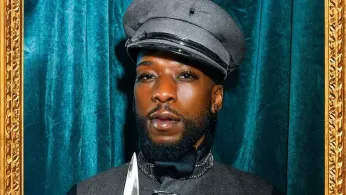
Hollywood Jade, the Toronto-based choreographer and television personality known for his work on “Canada’s Drag Race, ” is opening up about his latest international spotlight: competing as a “Faithful” on the reality competition series “The Traitors” and bringing his love of performance to a global audience.
In a recent feature published by the LGBTQ+ outlet Queerty , Hollywood Jade discussed his time filming “The Traitors, ” his earlier experience working on the movie musical “Hairspray, ” and how a surprise rehearsal with actor and former California governor Arnold Schwarzenegger led to one of his most unexpected celebrity dance moments.
“The Traitors” is a reality competition format in which contestants are divided into secret “Traitors” and “Faithfuls, ” with players attempting to identify and eliminate the Traitors while completing group missions for a shared cash prize. On the American version streaming on Peacock , the cast features reality stars, actors, and public figures in a social-strategy setting filmed in a remote castle location.
According to Queerty, Hollywood Jade appears on “The Traitors” as one of the “Faithfuls, ” navigating the paranoia and alliances that define the game. In the interview, he describes the show as a high-pressure environment that challenged his instincts and social skills in ways that differ from his usual work behind the scenes as a choreographer on stage and television productions.
Hollywood Jade notes that participating in the series allowed him to bring a queer, Black, Canadian perspective into a competitive reality space that is often dominated by U. S. -based personalities. He emphasizes that visibility for LGBTQ+ people of color in mainstream unscripted television remains significant, especially when contestants are shown as fully realized individuals rather than stereotypes.
The choreographer also hints at behind-the-scenes dynamics, telling Queerty that viewers only see a portion of the social maneuvering that happens in the castle, and that the emotional and psychological elements of the game can be intense. He frames his strategy as rooted in authenticity and intuition, reflecting an approach he has discussed in earlier profiles about bringing his whole self into every professional space.
Long before “The Traitors, ” Hollywood Jade was building his career in film and television choreography. In the Queerty interview, he recalls working on the 2007 movie musical “Hairspray, ” directed by Adam Shankman and starring John Travolta, Queen Latifah, and Nikki Blonsky. The film is an adaptation of the Broadway musical, itself based on John Waters’ 1988 movie, and tells the story of a plus-size teenager fighting for racial integration on a 1960s TV dance show.
Hollywood Jade describes the “Hairspray” set as a formative environment where he observed large-scale musical filmmaking up close and saw how choreography, camera work, and storytelling intersect. Working on such a high-profile production at an early stage of his career gave him insight into how big-budget musical numbers are developed from rehearsal room to soundstage.
In previous interviews, he has spoken about the power of seeing diverse bodies and performers in dance spaces, especially within pop culture that reaches wide audiences. “Hairspray, ” with its focus on racial justice and body positivity framed through music and dance, reinforced for him the importance of using choreography as a tool for representation and inclusion.
Queerty reports that Hollywood Jade also remembers moments on the “Hairspray” set involving lead actor John Travolta, who played Edna Turnblad in heavy prosthetics and stylized costumes. Observing how an established star tackled complex choreography while in character helped shape his understanding of how to support performers of all levels and backgrounds in achieving strong movement on camera.
One of the most striking anecdotes from the Queerty piece involves Hollywood Jade’s experience choreographing for Arnold Schwarzenegger. The interview recounts how the choreographer was brought in for a project requiring Schwarzenegger to dance, prompting Jade to adapt his usual style for a performer best known for action roles rather than musical theater.
Queerty notes that Hollywood Jade approached the rehearsal with openness and respect, aiming to meet Schwarzenegger where he was in terms of comfort and ability, rather than forcing choreography that did not fit. He describes being pleasantly surprised by Schwarzenegger’s willingness to commit to the movement and engage fully with the process, which turned what might have seemed like an unlikely collaboration into a memorable professional highlight.
Beyond his specific projects, Hollywood Jade tells Queerty that he remains deeply committed to Canada’s drag and queer performance communities. As a resident choreographer and judge on “Canada’s Drag Race, ” the Canadian spinoff of the global “RuPaul’s Drag Race” franchise produced by World of Wonder and Bell Media, he has helped shape some of the series’ most memorable musical and lip-sync performances.
In the interview, Hollywood Jade highlights what he sees as the distinctive qualities of Canadian drag: a combination of strong performance skills, cultural diversity, and a sense of community that extends beyond competition. He points to the way Canadian drag artists often fuse elements of camp, political commentary, and high fashion with regional references and personal narratives.
Earlier coverage has documented how Hollywood Jade’s work on “Canada’s Drag Race” emphasizes musicality and storytelling, pushing performers to connect choreography with character and emotion rather than relying solely on technical tricks. In an IN Magazine cover story, he described authenticity as a guiding principle, stating that his artistry is rooted in being unapologetically himself as a queer Black man from Toronto.
Queerty’s interview situates this philosophy within a broader conversation about drag as an art form under heightened public scrutiny. Hollywood Jade’s visibility on reality television, both in Canada and now on “The Traitors, ” underscores the role that drag-adjacent creatives—choreographers, directors, and designers—play in showcasing LGBTQ+ talent and narratives on screen.
Hollywood Jade’s path to becoming a recognizable figure in queer entertainment has included music videos, concert tours, and stage shows in addition to television work. Canadian outlet ByBlacks reported that he has choreographed and performed with a range of artists while championing inclusive casting and storytelling in his projects. IN Magazine has similarly portrayed him as a multi-hyphenate creative who moves between dance, television, and live events while centering LGBTQ+ communities.
In speaking with Queerty, Hollywood Jade connects his current reality television visibility back to that long-term commitment. He notes that each new platform—from “Canada’s Drag Race” to “The Traitors”—offers an opportunity not only to advance his own career but to normalize seeing queer and gender-diverse people of color in varied roles on screen, including as strategists, mentors, and judges.
The interview also touches on the importance of mentorship and collaboration within queer creative networks. Previous coverage has documented Hollywood Jade’s involvement in Pride events, including performances and programming around Pride Toronto, where he has used music and dance as tools to celebrate and affirm LGBTQ+ communities. Those experiences inform his approach to newer projects, where he seeks to foster supportive environments even in competitive settings.
The Queerty interview underscores that for Hollywood Jade, visibility is inseparable from craft. Whether he is shaping a lip-sync performance on “Canada’s Drag Race, ” choreographing for a film set, or navigating a social-strategy game in a castle, his work is informed by lived experience, a commitment to inclusive storytelling, and a belief in the power of dance to connect audiences across borders.
As Queerty’s latest feature makes clear, Hollywood Jade’s journey from Toronto dance studios to international reality television illustrates how queer creatives from outside traditional U. S. entertainment hubs are increasingly shaping global pop culture conversations. His current turn on “The Traitors” adds another chapter to a career that continues to blend choreography, representation, and resilience on some of the world’s most-watched stages.